Respiratory system
7 min read · Published July 27, 2026
How your lungs actually clean themselves (and what tar does to that system)
Most people picture the lungs as two passive bags of air. They are closer to a self-cleaning machine that runs 24 hours a day, and cigarette smoke attacks the exact part that does the cleaning.
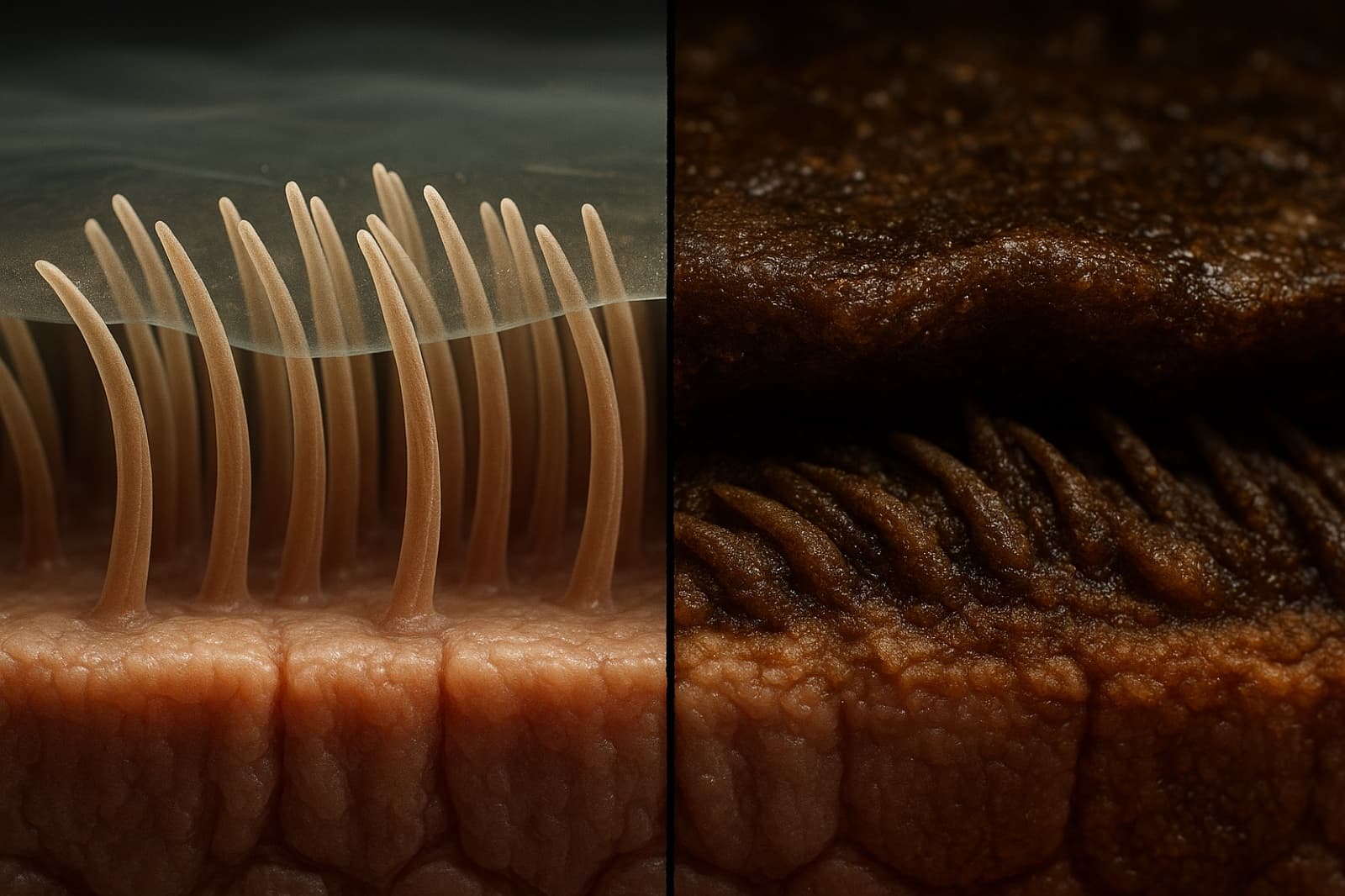
The cleaning system, paralyzed
A billion microscopic hairs beat 10 to 20 times per second to sweep dirt out of your lungs. Hot smoke stops them within minutes and destroys them with repetition. This is the machine you switch back on when you quit.
Medical illustration generated with AI. Not a photograph of a real patient.
The escalator you never knew you had
The inside of your airways is carpeted with roughly a billion cilia: microscopic hairs that beat between 10 and 20 times per second, always in the same direction, upward toward your throat.
On top of them floats a thin layer of mucus that traps dust, pollen, bacteria and soot. The beating cilia push that dirty mucus up to the throat, where you swallow it without noticing, several times an hour, every hour of your life. Doctors call this mucociliary clearance. It is the reason a non-smoker does not cough all day in a city.
What a single cigarette does to it
Hot tobacco smoke paralyzes the cilia within minutes. They slow down, stop beating in coordination and, with repeated exposure, are destroyed and replaced by cells that have no cilia at all.
At the same time, smoke irritates the mucus glands into producing much more mucus, and thicker mucus. So you get the worst possible combination: more dirt to move, thicker material to move it in, and a broken conveyor belt.
That is why the tar, particles and carcinogens simply sit there. A pack-a-day smoker deposits a significant amount of tar in the airways every year, and it stays where the cleaning system can no longer reach.
Why the cough gets worse before it gets better
One of the most common reasons people relapse in the first month is terrifying: they quit and start coughing MORE. They conclude that quitting hurt them.
The opposite is happening. Within days to a few weeks of the last cigarette, the surviving cilia recover their beat and new ciliated cells regrow. The conveyor belt turns back on and starts evacuating years of accumulated debris. That cough is the sound of your lungs taking out the garbage.
This phase typically peaks in the first weeks and settles over the following months. If a cough is severe, bloody, or lasts beyond three weeks, that is a reason to see a doctor, not to light a cigarette.
The repair timeline inside the airway
In the first 12 hours, carbon monoxide clears and your red blood cells go back to carrying oxygen normally.
Between 2 and 12 weeks, airway inflammation drops and lung function measurably improves. Many ex-smokers notice stairs become easier before they notice anything else.
Around 1 to 9 months, ciliary function is substantially restored and both coughing and shortness of breath fall dramatically. The lungs will never be identical to a never-smoker's lungs, but the cleaning system, the part that protects you from every future infection, comes back.
The takeaway
You do not clean your lungs with juices, herbs or breathing gadgets. You clean them by stopping the smoke long enough for the cilia to grow back and do the job they were designed for.
Knowing the damage is step one. Step two is the counter.
Start your smoke-free clock now and watch these exact systems repair themselves, hour by hour.
Start my counterKeep reading
Educational content based on public health sources including the WHO, the CDC and U.S. Surgeon General reports. It does not replace medical advice: talk to your doctor about your specific case.