Cardiovascular
8 min read · Published July 26, 2026
What smoking does to your arteries, minute by minute
Cancer gets the headlines, but cardiovascular disease kills more smokers than any single cancer. The mechanism is not mysterious, and it starts within minutes of the first cigarette of the day.
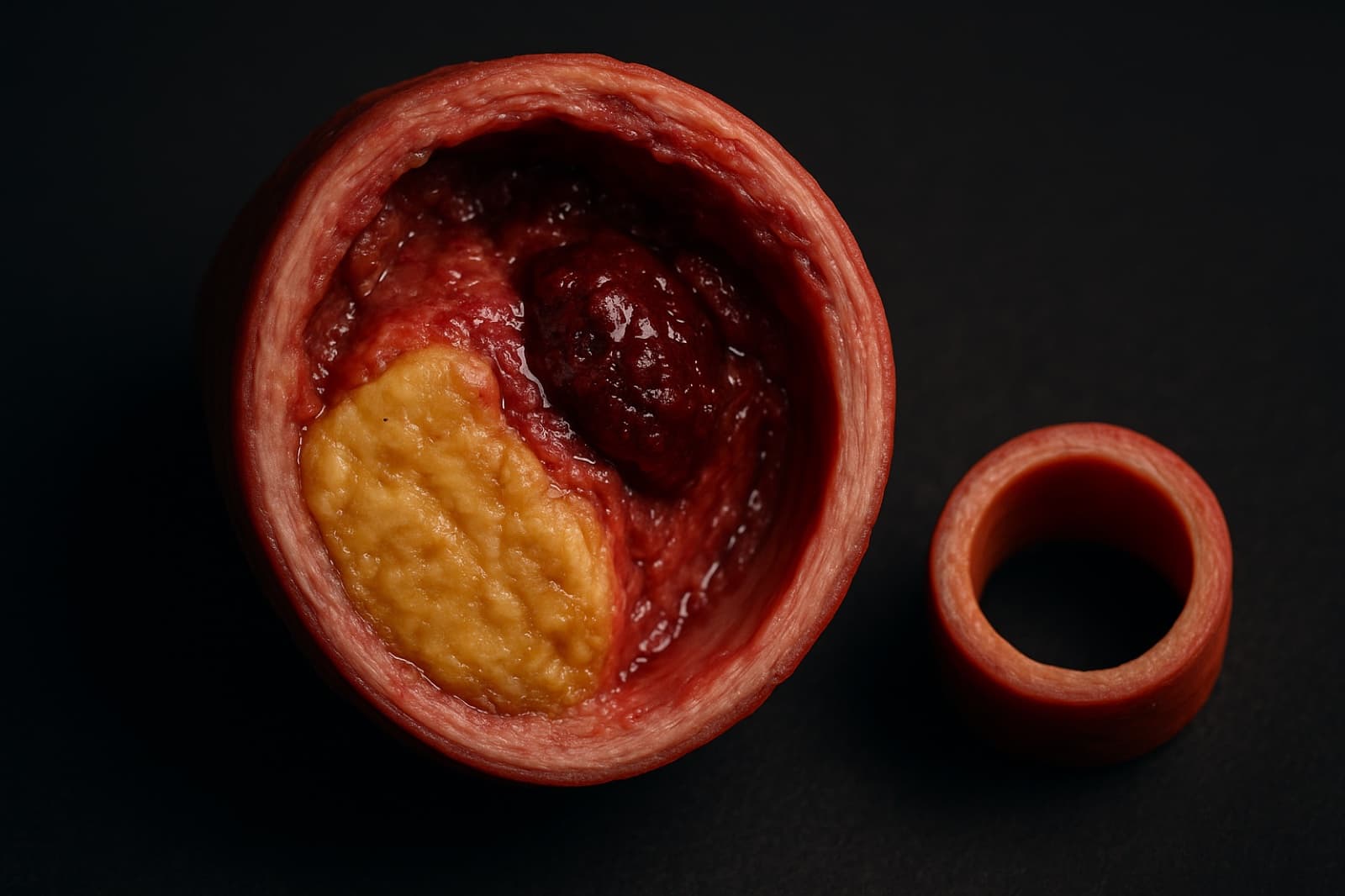
The artery that causes a heart attack
Most heart attacks are not a slow blockage. An inflamed plaque ruptures and the sticky blood of a smoker seals the artery in seconds. This is what the last minute looks like from inside.
Medical illustration generated with AI. Not a photograph of a real patient.
The endothelium: the organ nobody talks about
The inside of every blood vessel is lined with a single layer of cells called the endothelium. Spread flat it would cover several tennis courts. It is a real organ: it decides when vessels dilate, keeps blood from clotting where it should not, and controls what crosses into the vessel wall.
Smoke damages this layer directly. Within minutes of smoking, arteries lose part of their ability to dilate, an effect measurable in a lab and present even in young, healthy smokers with normal cholesterol.
The chain reaction, in order
First, nicotine triggers adrenaline: heart rate rises, blood pressure rises, and the heart demands more oxygen at the exact moment carbon monoxide is reducing the oxygen your blood can carry.
Second, the injured endothelium becomes sticky. LDL cholesterol slips into the vessel wall, oxidizes and attracts immune cells that turn into foam cells. That is the birth of an atherosclerotic plaque.
Third, smoking makes platelets more prone to clumping and raises fibrinogen, so your blood is measurably more prone to clotting.
Fourth, the plaque grows a thin fibrous cap. Smoking promotes the inflamed, unstable kind of plaque, the kind that ruptures.
How a heart attack actually happens
Most heart attacks are not caused by a slow, gradual blockage. They happen when an unstable plaque ruptures, exposing its contents to the blood. Within seconds, the sticky platelets of a smoker form a clot that seals the artery shut.
That is why fit-looking people in their forties collapse without warning. The plaque did not need to be big. It needed to be unstable, and the blood needed to be primed to clot. Smoking delivers both.
The same mechanism in the brain is a stroke; in the legs it is peripheral arterial disease, which causes pain while walking and, in advanced cases, amputation.
The reversal is faster than you would expect
Blood pressure and heart rate begin normalizing within an hour of the last cigarette. Carbon monoxide clears in about 12 hours.
Within 24 hours the risk of a heart attack already starts to fall, and platelet stickiness improves within weeks.
At one year smoke-free, the excess risk of coronary heart disease is roughly halved compared with continuing to smoke. Over 5 to 15 years, stroke risk can approach that of a never-smoker.
No medication delivers that magnitude of cardiovascular benefit for zero cost.
The takeaway
Every cigarette is a small, temporary injury to a living organ that lines your entire body. Stop the injuries and the tissue starts healing within hours, not years.
Knowing the damage is step one. Step two is the counter.
Start your smoke-free clock now and watch these exact systems repair themselves, hour by hour.
Start my counterKeep reading
Educational content based on public health sources including the WHO, the CDC and U.S. Surgeon General reports. It does not replace medical advice: talk to your doctor about your specific case.