Mouth and throat
6 min read · Published July 25, 2026
Your mouth is the first victim: teeth, gums and the taste you lost
The mouth takes the full concentration of the smoke before anything is diluted. It is also the one damaged organ you can see in a mirror every morning.
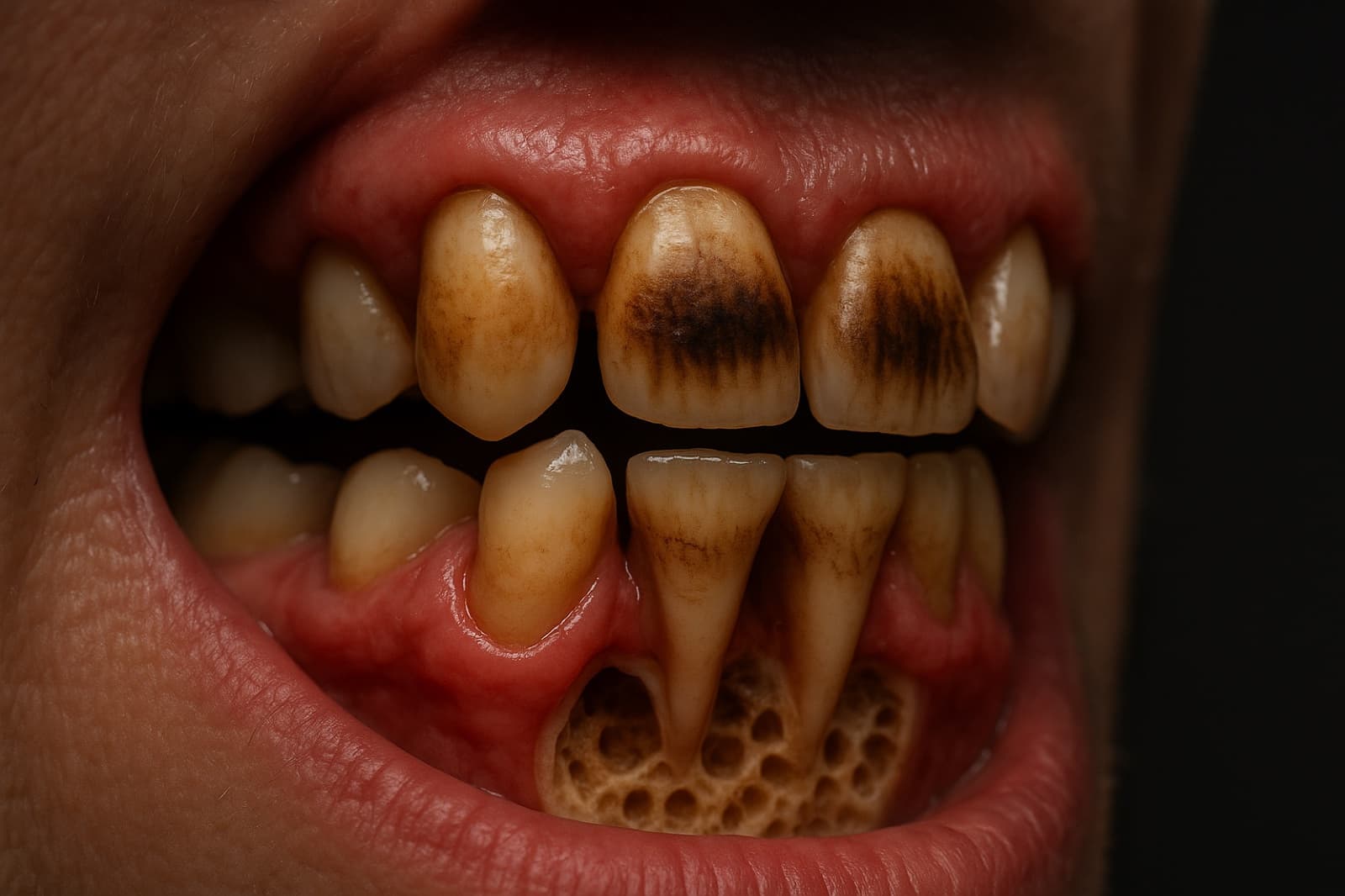
Graphic clinical content
The gums that stopped warning you
Smoking constricts the vessels of the gums, so they bleed less. The early warning sign disappears while the infection keeps eating the bone that holds your teeth. By the time they feel loose, this is the stage underneath.
Medical illustration generated with AI. Not a photograph of a real patient.
Gum disease that hides its own symptoms
Bleeding gums are the early warning sign of periodontal disease. Smoking constricts the small vessels of the gums, so smokers bleed less, not because they are healthier but because the blood supply is choked.
The infection continues underneath in silence, destroying the bone that anchors your teeth. By the time a smoker notices loose teeth, the disease is usually advanced. Smokers have roughly twice the risk of severe gum disease, and tooth loss follows.
Why dental implants fail more often in smokers
Implants need bone to fuse to titanium and gum tissue to seal around it. Reduced blood flow and impaired healing make smokers a well-documented higher-risk group for implant failure.
Many oral surgeons ask for a period of abstinence before and after implant surgery. It is not a moral judgment, it is a survival rate calculation.
The taste and smell you traded
Heat and chemicals flatten the microscopic structures of taste buds and damage the olfactory receptors in the nose. Since most of flavour is actually smell, smokers live in a muted version of eating.
This is one of the fastest and most rewarding recoveries: taste and smell begin returning within about 48 hours of the last cigarette, and keep sharpening for weeks. Ex-smokers routinely describe rediscovering food they had eaten for years without really tasting.
Breath, stains and the tissue underneath
Smoker's breath is not just residual smoke: it is a combination of dried-out mucous membranes, altered oral bacteria and gum infection. Mints cover the smell for minutes and change none of the causes.
Tar stains enamel and, worse, sticks to the microscopic pores of dentine, which is why professional cleaning helps but does not fully restore colour in long-term smokers.
There is also a precancerous side: leukoplakia, those white patches inside the mouth, is strongly linked to tobacco and can progress to oral cancer. Any white or red patch that lasts more than two weeks belongs in a dentist's chair.
The takeaway
The mouth shows the damage first and rewards quitting first. Within two days you get flavour back; within weeks, gums that finally tell you the truth about their own health.
Knowing the damage is step one. Step two is the counter.
Start your smoke-free clock now and watch these exact systems repair themselves, hour by hour.
Start my counterKeep reading
Educational content based on public health sources including the WHO, the CDC and U.S. Surgeon General reports. It does not replace medical advice: talk to your doctor about your specific case.